
How to start an embroidery business
From the first machine to steady corporate orders.
1. Choose your market
Workwear, clubs and corporate polos reorder every year; they make a steady base.
2. Get digitising right
Good digitising decides how a logo sews. Charge for it once per design and keep the file for repeats.
3. Price by stitches
A rate per thousand stitches with a minimum per piece keeps small logos and large backs fair.
Why embroidery makes a good business
Embroidered logos look smart, last for years and suit polos, workwear, caps, fleeces and bags. That makes embroidery a natural fit for businesses, trades, schools, clubs and uniforms, which all reorder. Unlike screen printing there are no screens to make, so a run of ten polos costs about the same per piece to set up as a run of a hundred, once the logo is digitised. The trade-off is speed: a machine sews one design at a time per head, so your capacity is set by heads and hours.
Choosing a machine
Commercial embroidery machines are very different from home sewing machines with an embroidery attachment. For a business you want a multi-needle machine, so the machine changes thread colours on its own.
- Single-head machines with around 12 to 15 needles are the usual start. They handle most logos and fit in a small room.
- Multi-head machines sew the same design on two, four, six or more garments at once. They suit larger runs once you have the orders.
- Look at the maximum sewing field, the speed, and whether a cap frame and cap driver are included or extra.
- Ask about training, local service engineers and how quickly parts arrive. Downtime costs more than the machine.
New and used machines both sell well, and prices vary a lot by brand, heads and accessories. Check current prices with several dealers, and if you buy used, get the machine serviced and ask for its stitch count history if the controller shows it.
The supplies you will need
- Hoops in several sizes, plus a hooping station to get placement consistent.
- Backing (stabiliser): cutaway for knits such as polos and tees, tearaway for stable fabrics such as caps and towels, and water-soluble topping for towels and fleece.
- Thread: polyester is the common choice for workwear because it is strong and colourfast; rayon has a higher sheen.
- Needles in a few sizes and point types, bobbins, spray adhesive, scissors and snips.
- A heat press or steamer for finishing, and good lighting for checking work.
Digitising: do it or buy it?
Every logo has to be turned into a stitch file before it can sew. This is called digitising, and it decides how good the result looks. A poor file puckers, gaps or breaks threads. You have two choices. You can learn to digitise with professional digitising software, which takes time to learn well. Or you can send logos to a digitising service and pay per design. Many new shops outsource at first and learn over time. Either way, charge the customer a digitising fee once per design, keep the file safe, and do not charge again when they reorder the same logo at the same size.
Your machine reads a stitch file format such as DST, which is the most widely used format across commercial machines. Keep both the stitch file and the original artwork, labelled clearly with the customer name, size and thread colours.
Pricing embroidery
The usual method is to price by stitch count. You charge a rate per thousand stitches, with a minimum charge per piece so tiny logos still pay for the hooping and handling. A typical left chest logo often runs to a few thousand stitches, while a full back design can be many times that. On top of the embroidery you add the garment cost with your markup and the digitising fee spread over the order.
- Garment cost plus your markup.
- The higher of your minimum per piece or the stitch count divided by 1,000 times your rate.
- Digitising, once per design, spread over the quantity.
- Extra for caps, 3D puff, very small runs or rush jobs.
Build a price grid by stitch count and quantity so you can quote quickly. Our embroidery pricing calculator shows the maths for a single job.
Register the business and sort tax
In the UK, register with HMRC as a sole trader for Self Assessment, or set up a limited company at Companies House. Register for VAT when your taxable turnover passes the threshold in any rolling 12 months, and check the current figure on GOV.UK. Keep records of every sale and purchase from day one.
In the US, choose a sole proprietorship or an LLC under your state rules, get a free EIN from the IRS, and apply for a sales tax permit in your state. A resale certificate lets you buy blank garments for resale without paying sales tax. If you sell to buyers in other states, check where you may need to collect sales tax. An accountant who knows small businesses is worth paying for in the first year.
In both countries, take out insurance that covers your equipment, liability to customers and the customer garments you hold.
Finding customers who reorder
The best embroidery customers order the same thing again and again. Focus on them:
- Trades and local businesses: polos, softshells and hi-vis with a logo.
- Hospitality: aprons, chef jackets and staff polos.
- Sports clubs: coaches' jackets, leisure wear and bags.
- Schools: staff wear, leavers hoodies and sports kit.
- Corporate clients: welcome packs, events and uniform programmes.
Bring sewn samples when you visit businesses. A real embroidered logo on a good polo sells better than any brochure. Ask happy customers for a review on your Google Business Profile, and set up an online store for clubs and companies so staff and members order their own sizes.
A workflow that avoids reworks
- Confirm garments, colours, sizes, logo positions and logo sizes in writing.
- Send a sew-out photo or proof with thread colours for approval before running the order.
- Order blanks once the proof is approved and any deposit is paid.
- Sew a test piece on the same fabric before the full run.
- Trim, check, fold and pack, then invoice the balance.
Where Dyenzo fits
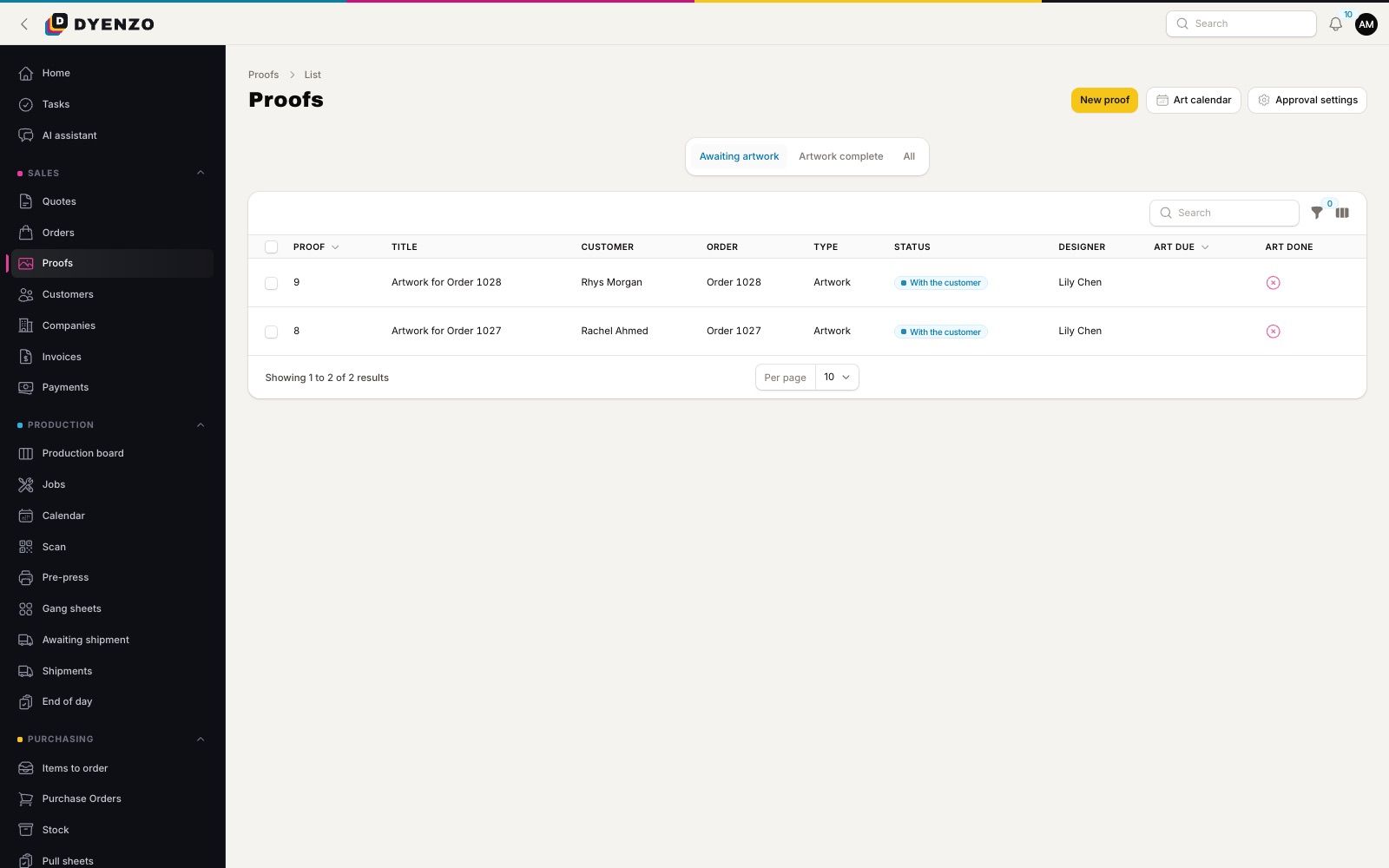
Dyenzo reads DST and EXP files, measures the stitch count and size from the file, and shows a stitch preview in the thread colours you pick. Quotes price from your stitch-count grid with the digitising fee charged once per design, proofs go to the customer to approve online, and repeat orders do not charge digitising again.
Questions
What is the best embroidery machine for a new business?
Most new shops start with a single-head, multi-needle commercial machine with around 12 to 15 needles and a cap frame. Choose a brand with good local service and training.
Do I need to learn digitising?
Not at first. Many shops send logos to a digitising service and learn the software later. Learning it yourself gives you more control and faster turnaround in the long run.
How much should I charge for digitising?
Charge a one-time fee per design that covers your cost or your digitiser's fee plus your time. Waive it on repeat orders of the same logo at the same size.
Which backing should I use?
Cutaway for stretchy knits such as polos and tees, tearaway for stable fabrics, and a water-soluble topping on towels and fleece so stitches sit on top of the pile.
Related
Dyenzo is opening to its first print businesses
Write to us for early access. Tell us what you print and which modules you need.